
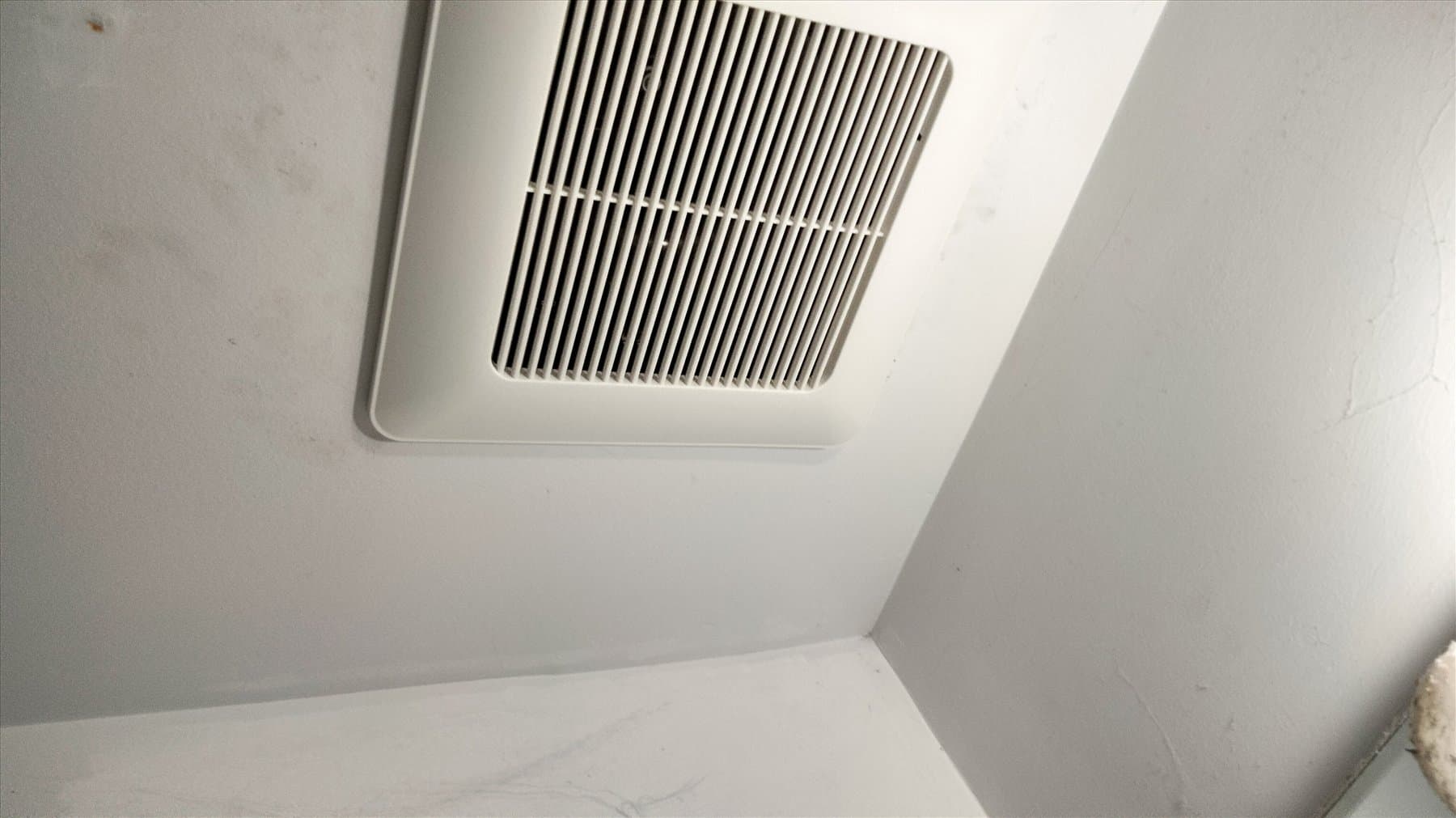
Bathroom fan replacement can be the right answer, but the useful answer is rarely “swap the noisy box and hope for the best.” Start with the complete exhaust path. A fan may be ready for replacement, or it may be working against a blockage, damaged duct, or damper that is holding the system back.
That is the practical answer to who installs bathroom fans: choose someone who looks beyond the fan grille. A good bathroom fan installer considers the fan, the duct route, and the exterior exit as one system. That approach gives you a clear reason for the work, rather than a shiny new fan trying to push through an old bottleneck. Nobody needs that little plot twist.
The decision usually becomes clearer when weak airflow is checked in a sensible order. Blockage comes first, followed by duct damage, then the possibility that the fan is undersized for the installed conditions. Each possibility points to a different kind of work, and only one of them makes bathroom exhaust fan replacement the main event.
This matters because the fan’s sound is not a reliable scorecard. A fan can run, hum, and seem quite determined while the exhaust path is restricted somewhere else. On the other hand, a fan that is too small for the real route may keep running faithfully without delivering the airflow the bathroom needs. An assessment turns that uncertainty into a practical plan.
CFM is part of that plan. It means cubic feet per minute: the amount of air a fan moves. The number printed on a fan box is measured in laboratory conditions with very little resistance. Real homes add ducting, bends, and an exterior vent cap, all of which can reduce the airflow delivered through the complete route. A bathroom exhaust fan installation is therefore more than matching a number or finding a unit that fits an existing opening.
When you replace bathroom fan equipment, fit still matters, of course. So does the path the air has to travel after it leaves the fan. A direct exchange can be a sensible choice when the rest of the system supports it. In other situations, the better decision may involve attention to the duct route or damper along with the fan. The point is to choose work that addresses the actual restriction rather than simply replacing the most visible part.
The backdraft damper deserves a little respect here. It is a small flap in the ducting that opens when the fan runs and closes when the fan stops. In its normal role, it blocks outside air, pests, and unconditioned air from entering through the duct while the fan is off. Small part, very real job.
A damper can create two very different problems. When stuck open, it can allow drafts, cold air, and condensation. When stuck closed, it can block the exhaust even while the fan continues to run and sound normal. That is one more reason a calm, system-wide review is more useful than making a decision from noise alone.
For homeowners in Surrey, Burnaby, Richmond, Coquitlam, Delta, and New Westminster, Bathroom Fan Pros operates in the Central Lower Mainland service zone. Routing in this zone is address-based and can cross simple municipal labels, so the address review remains the useful way to confirm current serviceability and access. The city names help you understand the governed service area; they are not a substitute for looking at the particular route to the home.
A specialist-led bathroom fan installation can create a much more satisfying outcome than a quick like-for-like swap. You get a clear explanation of whether the fan is the limiting piece, whether the duct path deserves attention, and how the proposed work fits together. That clarity makes the decision lighter. It also gives the bathroom a better chance to move air as the installed system is intended to do.
There is a useful difference between an old fan and a fan that is actually the source of the problem. Age, sound, and appearance may prompt a conversation, but airflow through the full path should shape the recommendation. That is especially helpful when a homeowner is considering bathroom fan replacement because a bathroom seems slow to clear after ordinary use. The goal is a recommendation that fits the conditions found, not a one-size-fits-all answer.
If a replacement is appropriate, it becomes a chance to improve the whole plan around the fan. The review can account for the existing duct route, its turns, the vent cap, and the damper before a replacement direction is chosen. If the fan is not the central issue, the same review can identify the more relevant next step. Either way, the work begins with useful information instead of guesswork.
For a bathroom exhaust fan replacement in the Central Lower Mainland, begin by sharing the bathroom airflow concern and the property address for service review. Bathroom Fan Pros can then help frame the next conversation around the complete ventilation path, so your next step feels straightforward, well considered, and pleasantly free of fan-box surprises.